Building evidence, step by step.
Reliable sensing starts with careful measurements, clear data provenance and tests that can be repeated. These principles guide our development work.
01 Evaluation
Priorities and plans
Six priorities for repeatable tissue sensing.
Our evaluation plan covers measurement control, provenance, model testing, reference comparison and intended use.
-
Bench characterization
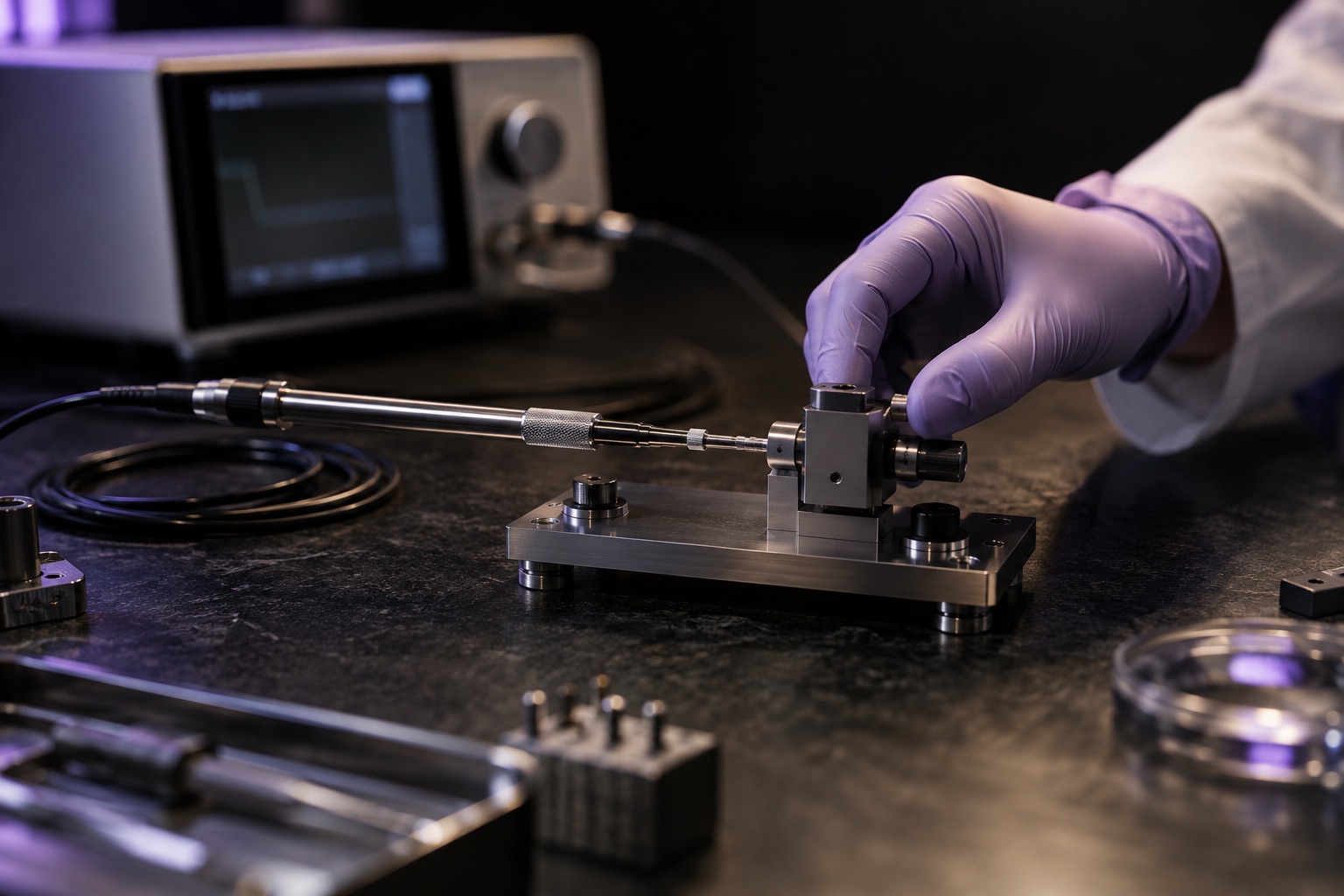
Measuring how tissue and reference materials respond across a range of frequencies under controlled conditions: fixed electrode geometry, recorded temperature and controlled contact. Repeating the same measurement under deliberately changed conditions shows which differences belong to the material and which belong to the setup.
Evaluation focus Measurement conditions
-
Calibration and repeatability
Open, short and known reference-load checks before measurement sessions, to characterize the instrument’s contribution and apply the appropriate corrections. Repeated measurements of the same reference and the same specimen show how much a reading varies from one session to the next, and drift is tracked across sessions.
Evaluation focus Instrument stability
-
Specimen provenance and labeling
Every measurement tied to its specimen and source, how it was handled and stored, the time since excision, temperature, instrument and calibration state. Tissue labels come from a reference method that is independent of the sensor and describes the same site that was measured.
Evaluation focus Sample traceability
-
Strict separation of training and test data
Data divided by specimen, and by animal or donor where that applies, never by individual measurement. Measurements from one specimen share its peculiarities, so they stay on one side of the split. A held-out set is kept untouched until a final evaluation.
Evaluation focus Independent test data
-
Comparison with reference measurements
Model output compared with reference labels and with established measurement methods on the same material. Results reported with their uncertainty, broken down by tissue type, with misclassified cases reviewed alongside the summary figures.
Evaluation focus Reference comparison
-
Evaluation against a defined intended use
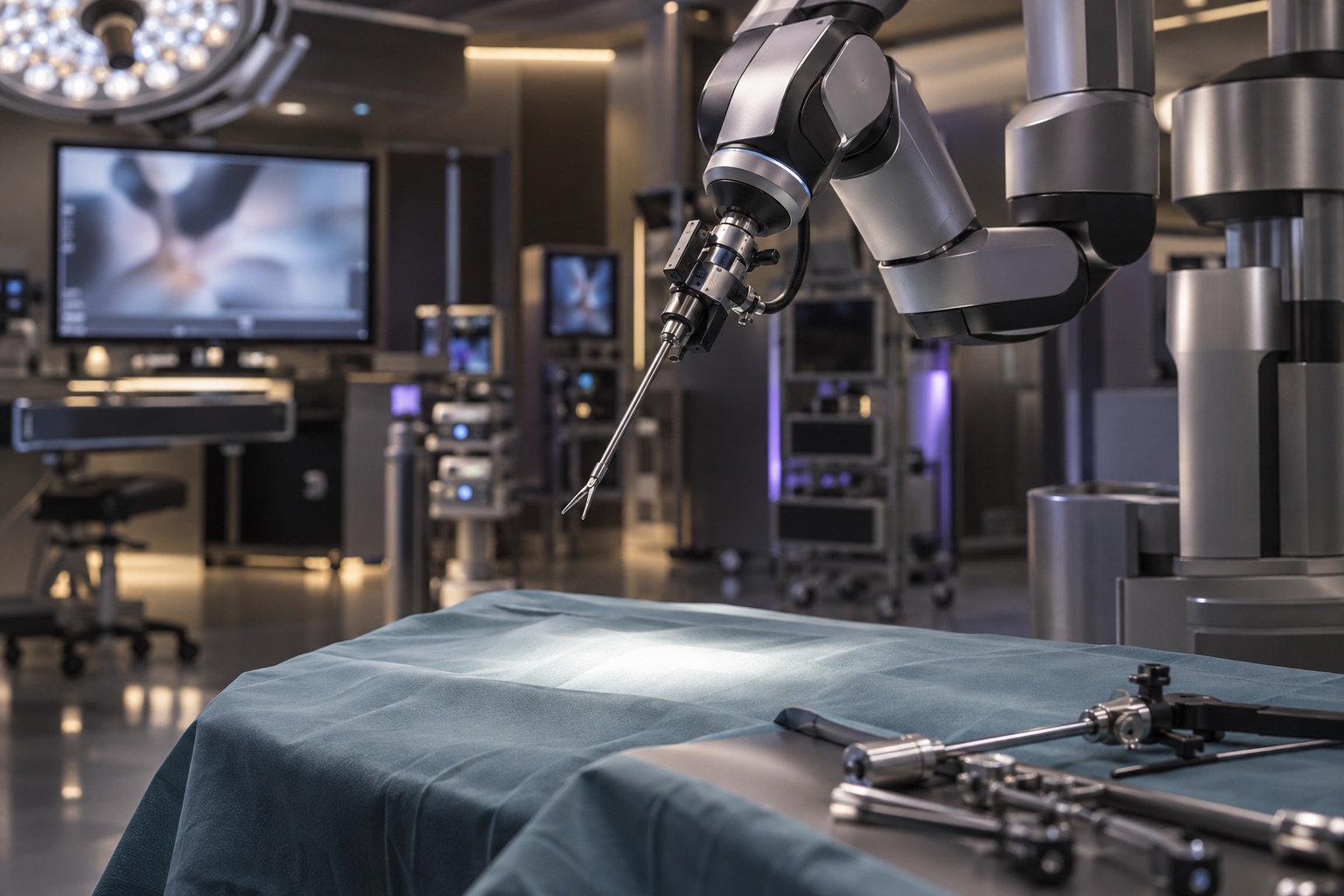
Each evaluation framed by the question it is meant to answer: which procedure, which tissues, which decision, which user, and what should happen when the output is uncertain or unavailable. Test conditions are matched to that intended use.
Evaluation focus Surgical relevance
02 Development status
Where development is focused.
- Stage
- Research and development
- Priorities
- Measurement setup, bench characterization and instrument integration
- Next stages
- Extending toward evaluation in surgical settings
- Status
- Investigational
03 Insights
Educational explainers
The science and method, explained.
Three explainers for surgeons, engineers and anyone curious: how tissue responds to alternating current, what it takes to measure that response through an instrument, and how tissue-sensing data are evaluated.
-
-

-


04 Questions
Common questions about our research.
What is bioimpedance?
Bioimpedance is the opposition that biological tissue presents to a small alternating electrical current. It has two parts: resistance, from ions moving through the fluids in and around cells, and reactance, from cell membranes storing charge much as a capacitor does.
Both parts change with frequency and with the structure of the tissue, so measuring them across many frequencies produces a spectrum that reflects how the tissue is built. Reading tissue with impedance explains this in more depth.
Is NeuraSense available for clinical use?
No. NeuraSense technology is in research and development. It is investigational and has not been authorized by the FDA for commercial sale or clinical use.
What stage is the work in?
NeuraSense is in research and development. Our development priorities are measurement setup, bench characterization and instrument integration. The next stages extend toward evaluation in surgical settings.
Do you publish results?
We share public updates when completed, reviewed work is ready. The insights on this page are educational explainers of the underlying science and evaluation methods.
Why define evaluation priorities early?
The way evidence is produced determines what it can support. Defining priorities early shapes how data are collected, labeled and tested from the start.
How can I discuss a research collaboration?
If you work on tissue sensing, surgical instrumentation, signal analysis or surgical data, tell us what problem you study and the kind of collaboration you have in mind. Start on the Collaborate page or write to info@neurasenselabs.com.
05 Collaborate
Discuss a research collaboration.
We welcome conversations with surgeons, researchers and engineers working on tissue sensing, instrumentation, signal analysis and surgical data.